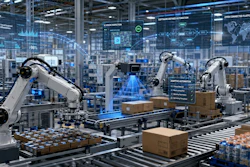
Amazon's Package Decision Engine is an AI model that selects the most efficient packaging for each product, reducing material waste like cardboard and air pillows while maintaining product safety during delivery. The model uses machine learning and computer vision to adapt to millions of products across global markets.
- Amazon's Package Decision Engine uses deep machine learning and computer vision to optimize packaging selection for every product.
- The AI reduces use of cardboard boxes, air pillows, tape, and mailers while ensuring safe delivery and sustainability.
- The model achieves empirical accuracy by predicting the most efficient package choice the majority of the time, according to Amazon scientists.
- Amazon is expanding the AI globally, adapting it to new languages, regional packaging types, and product variations across worldwide markets.
- The system operates on AWS cloud infrastructure and continuously learns from Amazon's ever-changing catalog of millions of products.
Amazon's integration of artificial intelligence (AI) into its decision-making processes marks the dawn of a new era in packaging and delivery efficiency. Amazon's Package Decision Engine, an AI model, optimizes packaging by selecting the most efficient option for each product. This reduces waste and enhances sustainability efforts while ensuring product safety during delivery.
At the heart of Amazon's packaging optimization efforts is the Package Decision Engine, a sophisticated AI model that meticulously selects the most suitable packaging for the company's myriad of products. From everyday household items to the most unique gifts, the AI determines the ideal type of packaging, aiming to minimize the use of materials such as cardboard, air pillows, and tape, thereby contributing to the company's sustainability objectives.
The AI model operates on Amazon Web Services (AWS) cloud and leverages a combination of deep machine learning, natural language processing, and computer vision. It can make informed decisions, such as identifying when a durable item like a blanket does not require additional protective packaging or when a fragile item necessitates a sturdier box. This continuous learning process is fueled by the vast and ever-changing catalog of products Amazon offers, making the model's accuracy and adaptability critical to its success.
"The Package Decision Engine, an AI model that Amazon designed and built, is able to determine the most efficient type of packaging for each item it learns about, helping reduce the number of cardboard boxes, air pillows, tape, and mailers used to send purchases to customers," explained Kayla Fenton, senior manager of technology products with Amazon’s Packaging Innovation team. This initiative streamlines the packaging process and plays a crucial role in making deliveries more efficient and reducing the environmental footprint.
Fenton highlighted the model's empirical accuracy: "Its decisions are empirically accurate, according to Amazon scientists, meaning that it predicts the most efficient package choice the majority of the time." This precision is paramount in ensuring that products are delivered safely and in the most environmentally friendly manner possible.
The success of the Package Decision Engine has led to its expansion beyond North American and European markets. Amazon is training the model for deployment worldwide, adapting it to new languages, unique packaging types, and regional product variations. This global rollout underscores the model's versatility and Amazon's commitment to reducing packaging waste on a global scale.