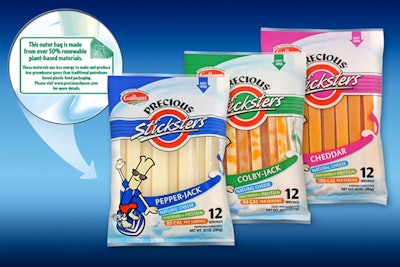
Buffalo, NY-based cheese maker Lactalis American Group, Inc., notes on its Web site that the company has “always been ‘green’ way before it was the popular thing to do.” The latest example is the renewable packaging it is using for its Precious® Sticksters® snack cheeses.
The packaging features a new film material made partially from plant-based plastic. This development is part of the Project EarthClear™initiative from Clear Lam Packaging, Inc.
Clear Lam’s renewable packaging materials are produced from plant-based bioplastics derived from Natureworks Ingeo™ PLA (polylactic acid) along with ingredients that enhance performance. These materials are part of the company’s Project EarthClear program and replace petroleum-based plastics with biobased ingredients developed to reduce the introduction of fossil carbon into the atmosphere.
The renewable Precious Sticksters package is made at Lactalis on horizontal form/fill/seal machinery. The package, which holds individually sealed cheese sticks, is made from a lamination of plant-based, renewable plastic and an outer layer made from traditional petroleum-based plastic. This new material, which is 50% plant-based, reportedly generates up to 35.2% fewer greenhouse gases and uses up to 36.8% less energy than the conventional petroleum-based materials it replaces.
Lactalis made the packaging change as part of its corporate sustainability commitment. “We’re pleased to have partnered with Lactalis to help introduce this new, renewable package for Precious Sticksters,” says James Sanfilippo, president and CEO of Clear Lam Packaging, Inc. “Clear Lam and Lactalis conducted extensive internal R&D and real-world testing to ensure this material met our rigorous standards for sustainability, durability, and print quality.”
Clear Lam produces the proprietary bio-based layer used in the film from pellets and additives, then the finished film is shipped to a Lactalis production facility where its Precious Sticksters products are packaged.
The finished bags are said to perform well under typical distribution conditions and meet all FDA requirements for food use. It was very important to Lactalis that the finished materials had a lower carbon footprint and used less energy without losing production efficiencies or impacting product performance. High-speed sealing was a critical requirement.
“We achieved that and more with this new packaging,” notes Frederick Bouisset, president and CEO of Lactalis American Group, Inc. “We believe that by adopting this new packaging, we are promoting a better future by reducing our energy consumption and environmental impact--a long-term goal to which we are fully committed.”