Glass
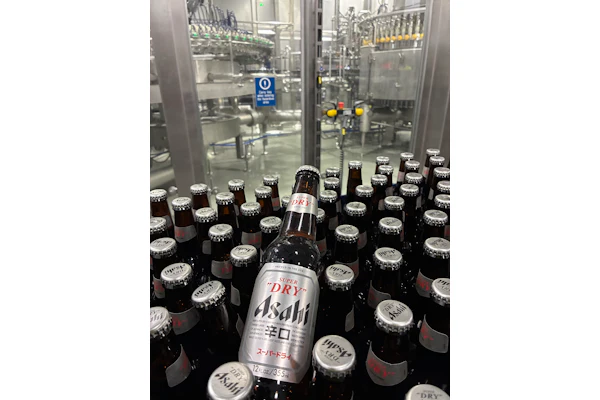
“Glass is not only 100 percent recyclable, it’s endlessly recyclable,” says Kevin Stevens, vice president Global Marketing, O-I. “Glass requires no additional additives to maintain its purity or its performance characteristics in the recycling process.”
In production, glass produced with cullet, or recycled glass, requires 25 percent fewer BTUs per gram of material compared to virgin glass. This use of cullet also leads to increased furnace life and reduced emissions. The choice of using glass is further validated by the US FDA, which rates it as “GRAS” or generally regarded as safe for food and beverage products.
Aluminum
“Half the U.S. population has access to curbside recycling of aluminum cans,” says Robin King, vice president public affairs, The Aluminum Association. No wonder, he adds, that aluminum has a 51 percent recycle rate.
“There are more than 50 billion cans recycled annually in the U.S., and almost all the recycled can material goes into new cans, helping to produce a closed-loop manufacturing system. Also, the US aluminum industry has just signed on to the Asia-Pacific Partnership Six-Nation Accord, pledging to make practical, measurable contributions to clean economic development and the reduction of greenhouse gases. Aluminum is one of seven industry sectors to do so.”
The production process of new cans from recovered aluminum requires 95 percent less energy compared to producing virgin aluminum. Aluminum is recycled more often due to its resale value, so there is less municipal waste and litter. “Aluminum is infinitely recyclable,” King says.
Steel
Bill Heenan, president, Steel Recycling Institute, says that can manufacturers have significantly reduced the steel content in cans over the years and that more than 60 percent of steel cans in the U.S., Europe, Japan, and Korea are recycled. For every ton of steel recycled, 2귔 pounds of iron ore, 1군 pounds of coal, and 120 pounds of limestone are conserved.
According to Heenan, when a consumer recycles a pound of steel cans (the equivalent of six Campbell Soup cans), they conserve enough energy to light a 60 watt bulb for 26 hours. In 2004, American consumers recycled enough steel cans to keep that 60 watt bulb burning for over 8.6 million years. “Staying focused on the basics-reduce, recycle, and reuse-helps move manufacturers toward sustainability,” Heenan says.