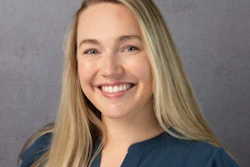
Liz Cuneo: Thank you, Charlotte, for joining me today for this prominent people in packaging interview. We'll kind of dive right in with your background. How'd you get involved in packaging, is that what you wanted to do? And then how did you get involved in candy?
Charlotte Ashcraft: Thank you very much for having me. I'm really excited to be here. So I actually didn't start in packaging, which I think is true for a lot of us that have eventually found our way into packaging, but I originally wanted to be an electrical engineer. I've always loved cars ever since I was a teenager, and so I always had this vision and dream of working for Subaru one day, and that's what I wanted to do with my electrical engineering degree. But I made it to about my 3rd year of electrical engineering.
I loved the hands-on more applied classes like circuits, but I was really struggling with the theoretical classes and the programming coursework. It just did not click in the way that I expected or in a way that I really wanted it to, so I was eventually kicked out of the electrical engineering program and that was paired with career services at my college. They were actually the ones that sat down with me and just kind of listened to everything that wasn't working for me in electrical, and they were the ones that recommended packaging to me, and it just seemed like everything that had been missing. I went to RIT (Rochester Institute of Technology), so I met with the RIT packaging program head, and I realized packaging was technical, but it was applied. It was creative but still structured. So, I actually filed the paperwork to switch my major that same day before I even left his office, it just kind of was perfect. I never really looked back.
I didn't specifically set out to work in candy. RIT has a really amazing co-op program, so they do a lot of work to pair students with companies that are hiring and I'm originally from High Valley where Just Born is located, and so I saw a posting for a packaging internship at Just Born when I was in college, and I wrote this glowing cover letter to the hiring manager at the time begging for an interview while I was home on my Christmas break. I got the interview and I got the internship at Just Born and I loved my internship here. I had not really ever considered working for an end user of packaging or a CPG company, but it was just so much fun working in food, and I've always loved cooking too, so it was a perfect balance of my interests and what I was doing. So, once I graduated college, there actually was not a full-time position open for me, and I went and worked in a different industry very briefly and did not care for it. It was very different, and I missed all the hands-on work that I got to do at Just Born. About 9 months later, I got a call that there was an opening for me and would I be interested in applying, and it was just incredible, stars aligned. I have been here full-time now for 10 years and I haven't looked back.
Cuneo: Wow, that's awesome. What a good story and so interesting about your major too, that you're on one course and you get kicked out. But you know, one door shuts, another one opens, so that's really cool.
Ashcraft: I think that experience for me was really disheartening, but I learned so much out of it, and I'm so glad that I had that experience at that age instead of having it later on and having this realization that I hated electrical engineering after I graduated and had already been working full time and then had to have a career switch at that point.
Cuneo: So yes, that's true. It was good timing.
Ashcraft: Yeah, for sure.
Cuneo: And I love what you said that you love cooking and so working in a food company, I imagine, it's kind of not like you're cooking, but you get to see how things are made, right? So that's really cool. So, what is the most exciting thing about your job? Is that it, seeing the candy being produced?
Ashcraft: It's everything, honestly, I think there's that, but you know, I think really my favorite is probably the variety of my work and the impact that I'm able to make through packaging. Packaging really sits at the intersection of engineering and graphics, sustainability, operations, brand. Everything eventually somehow feeds into packaging. I'm constantly shifting between solving a technical challenge and leading cross-functional initiatives and helping bring our brands to life on the shelf, and you know what's most exciting for me is seeing something go from an idea to a finished product that's in consumers' hands. Packaging is one of the most tangible ways that a company can connect with people and consumers and being part of that whole journey from concept through the execution of it is really rewarding. I think that's probably my favorite if I had to choose one.
Cuneo: Yeah, and that's true about the packaging; it has many functions now, from food safety to shelf display, and how we interact with it as consumers. Do you oversee everything from the packaging material itself to the machinery that's filling and labeling and packaging— kind of everything at Just Born?
Ashcraft: Yeah, so, if I don't oversee it, we also have my team. We oversee the structural packaging materials, the graphic design, the pre-press execution, and sustainability. But then a little bit upstream from that, we participate a lot in our capital packaging automation projects. And then on the other side of that, we also help the brand with some of their strategic work on new product innovation and packaging innovation, that sort of thing too.
Cuneo: OK, cool. How important is sustainability in packaging design?
Ashcraft: It's so important. Sustainability is no longer a nice to have, it's really become a core requirement, and it needs to be embedded in the project brief from the beginning, anytime we come up with something new. So, it influences everything from the material selection to the structure and the supply chain decisions and especially now the regulatory compliance. That's a huge part of it and that's really I think what's changed the most too, is the regulatory aspect of it. So, with all of the evolving legislation, namely EPR, the increasing consumer awareness, companies are not just expected to make these improvements, but to measure and to prove them as well.
I think the real challenge in opportunity, let's call it that, is designing packaging that balances sustainability and functionality and cost and the brand. There's really no one-size-fits-all solution, so it requires a lot of cross-functional collaboration and strategy.
Cuneo: How new is that push for more sustainability? Is that in the last 10 years or do you feel it really ramping up in the last 12 months?
Ashcraft: Definitely in the last 10 years, I think. I don't know, maybe about 7 or 8 years ago, it really started to become part of the conversation, but it was more this is something that we should be doing or at least should be considering, and now it's something that we have to build into the project. And I would say, a lot of that was driven by EPR and a lot of the legislation, so that's new, maybe not 12 months, but at least probably more like 24 months.
Cuneo: OK, sure. Let's talk a little bit about automation on the packaging line. How much of the packaging line is automated, if you can share that information, and then, how involved are you in that process?
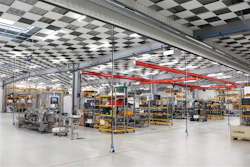
Ashcraft: There's a significant portion of our packaging operations that are automated, but there's also still a significant portion that's manual as well. So even the portion that is automated does not mean that it's hands off. Our packaging team plays a key role. We are responsible for defining the product scope, for automation. So, when we decide, hey, we're going to automate this, we must decide what exactly it is that we want to automate. When we implement something, let's call it maybe a case packer or something on the back end of it, our team is responsible for determining which products and packaging formats need to be included in that scope and ensure alignment across the whole value chain and all our key stakeholders. We're essentially bridging what our brand team wants to create, the requirements from our sales team like retailer specific requirements, and then what's technically feasible for engineering and the equipment suppliers that we're working with and production.
Even small changes on our packaging materials or the structure can impact the line performance. So that's why it's so important that we stay closely involved just to make sure that the design that we're coming up with works for consumers and our high-speed equipment.
Cuneo: How much are you hearing about the digital buzzwords for machinery these days, AI, digital twin, predictive maintenance, you know, a lot of those kind of newer technologies. Are you hearing as much about it or dealing with it?
Ashcraft: Yeah, I have been hearing about a lot of it, but the actual implementation, I'm not as close with. I think for us, we would like the technology, but we want to make sure it's proven and also value added at the same time. We want to make sure that if we're including some of this new AI or, you know, using a digital twin or something like that, that it's actually value added and not just an extra potential point to either break or something that we don't have the internal ability to support. We want to make sure that when we implement something, it's proven and it provides a lot of value to other companies like us who have already used it.
Cuneo: Yeah, that makes sense for sure. You know you mentioned sustainability maybe being what's most changed over the last 10 years. Has anything else surprised you, whether it's a new technology, a new consumer trend, anything that kind of stuck out to you in the last 10 years?
Ashcraft: I think I honestly still say sustainability, and I think the pace of it is really what's been the most surprising. When I started, like I said, it was important, but it wasn't structured or regulated as it is today, and it was something where, you know, if we were to put out a poll to consumers (and we didn't do this, some of our other fellow CPGs did).
It was something that consumers said that they wanted, but then when the time came to make a purchasing decision, the purchasing actions and decisions and that data did not align with what the consumers said they wanted. So, while they wanted sustainable packaging, they also weren't willing to pay more for it.
Then a lot of the EPR then is obviously what's driven that, and then there's just so many states that have come on board and so rapidly and not there's not a single one that is the same as another one. They're all their material categorization differently, their fee structures are different, and I understand that because it's directly correlates to their infrastructure.
Cuneo: Yeah, EPR is going to be a struggle or already is with anything that differs state to state and when you guys distribute your products nationwide, there's definitely going to be some complication there. It's a topic we're all kind of covering here. So, you know, what would you tell your younger self, just getting out of school?
Ashcraft: I think one of the biggest, I would maybe call it setbacks is when I was forced to pivot my major, so maybe just taking it back and saying that not everything that feels like a setback really is a setback. At the time, being asked to leave my original major, something that I wanted since high school for a number of years, even when I was a younger teenager, it just felt like a failure, but it ultimately led me to a career that I think fits me so much better than what I initially planned on. I think I also remind myself to stay curious, which is actually one of our new company values, and it's something that has always felt really close to me. Stay curious and ask more questions and not wait until you feel 100% ready to take on new challenges. Growth comes from stepping into things before you feel really prepared.
Cuneo: That's awesome. If we can circle back a little bit, you've said, you mentioned wearing different hats at the company, and the most exciting thing about your job is being able to do so many different things So, what does your day to day look like? Are you on the floor constantly? Are you behind the desk constantly?
Ashcraft: You know, it's a mix, and not a single day looks the same either. I started here as a packaging engineer, and when I was the packaging engineer, I spent a lot of time on the floor, so I was helping to write some of the SOPs for our equipment. I was working online trials to validate different structures. I was working on new materials and that sort of thing, so I spent a lot of time on the floor originally, but I came to oversee graphics a couple of years ago, and that really changed a lot of my scope.
I don't spend as much time on the floor as I used to, and I spend a lot more time working on our strategy and some of the implementation and also just navigating a lot of the regulations too. So, every day is something completely different, one could be focusing more on the packaging engineering side, and I'm also leading our environmental impact reduction strategy. So that's a lot more conceptual thinking work that I get to do too, so every day is a different challenge which I really like. I don't like to get bored.
I appreciate that every day just looks totally different, especially working on a seasonal business. Our Hot Tamales and peanut chews are all of an everyday business and then Peeps is a seasonal business. So, there's so much swing, between the two, and, you know, we could be doing long-term planning for Peeps or we could be doing something for Mike and Ike. So, that also presents a lot more variety in our work as well.
Cuneo: OK, cool. This is sort of a silly question, but kind of fun. If you didn't have this job, like what would you be doing, any idea? Maybe working at Subaru?
Ashcraft: Yeah, that's so funny, so I think if I wasn't working here, I would love to be teaching packaging at a university that offers packaging. I love building teams. I love mentoring and helping people grow and learn. I'm a lifelong learner myself. I love learning, so teaching other people is really satisfying for me. There's just something that's so fulfilling about taking complex concepts and making them approachable, especially for someone who's just starting out in their career.
Cuneo: Yeah, that's awesome. Mentorship can be really impactful. Maybe you have a teaching career ahead of you one day, right?
Ashcraft: We'll see.
Cuneo: Well, thank you, Charlotte, so much.
Ashcraft: Yeah, thank you.
Thanks for having me.