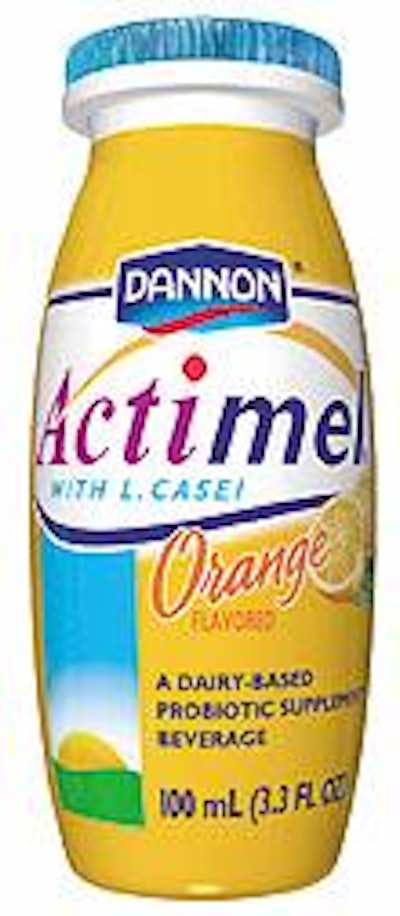
The growth of probiotics alone, says Minute Maid’s Sevugan Palaniappan, should spur the growth of plastic bottles cold-filled aseptically. Probiotic products use certain lactobacillus strains of bacteria that have been proven to enhance digestion and the ability of the immune system to ward off illnesses such as the flu or a cold. Currently, probiotics are in the refrigerated case, largely because the live cultures they contain require refrigeration. But Palaniappan believes, without providing specifics, that there are ways to market probiotic products in a shelf-stable format. The ingredients, however, will be heat-sensitive, so conventional methods of thermal processing, including hot filling of plastic bottles, won’t work. Once again, cold aseptic filling is an appealing alternative, says Palaniappan. “Convenience will drive these products out of the refrigerated case and likely into aseptically filled plastic,” Palaniappan predicts. The bottles, however, will require high barrier properties, because some probiotics may be sensitive to oxygen. “For this new breed of aseptically filled beverages we’ll need new barrier technologies, and there are some interesting ones coming out,” says Palaniappan. An obvious example, he adds, is the Bestpet™ technology originally developed by Coca-Cola (see Nov. ’99, p. 2 or pack world.com/go/bestpet). This exterior coating of silica, applied by a vacuum process on equipment developed by Krones and Leybold Systems, has been used thus far only on single-serve, carbonated soft-drink bottles in Europe and South Africa. Why not extend its use to probiotics, high-end juices, and other beverages whose nutrient content and/or flavor profile is worth maintaining even if it requires an investment in special packaging? Palaniappan says he can’t discuss such possibilities just now. But others are thinking along these lines. They’re asking: Why not aseptically fill barrier bottles for single-serve orange juice, which is rich in oxygen-sensitive vitamin C? Such an orange juice might even have other nutrients added to it. Aseptic processing would subject the product to minimal thermal degradation, and aseptic filling into barrier plastic bottles would ensure its shelf life.