This content was written and submitted by the supplier. It has only been modified to comply with this publication’s space and style.
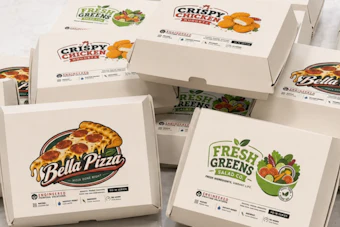
Engineered Printing Solutions (EPS) has launched its new XD-AQ high-viscosity water-based inkjet system, enabling packaging manufacturers, converters and distributors to achieve high-quality, vibrant print directly on fiber-based packaging.
The XD-AQ uses high-viscosity water-based ink technology to deliver analog print densities, quality and production speed for printing directly onto fiber-based, cartonboard and corrugated packaging.

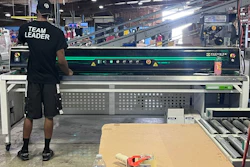
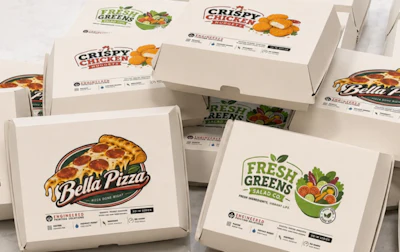
Designed specifically for porous substrates, the single-pass XD-AQ uses eight Xaar Aquinox printheads to jet high-quality, high-impact CMYK graphics directly onto cartons, corrugated board, molded-fiber products, cup blanks, bags and thick board. Crucially, it can decorate packaging after it has been die-cut, folded, glued or formed, helping producers move away from conventional workflows that require sheets to be printed before converting.
The XD-AQ's high-viscosity water-based ink technology delivers the color density and visual impact that many packaging producers struggle to achieve with conventional aqueous inkjet systems. By keeping more pigment at the surface of porous fiber materials, the XD-AQ produces richer colors, stronger density, sharper graphics and clearer small copy, even on challenging corrugated and molded-fiber substrates.
 EPS
EPS
The XD-AQ prints without UV lamps. On absorbent fiber, UV ink that sinks below the surface never sees the light that cures it — water-based ink has no photoinitiators or monomers in the first place. The XD-AQ’s inks are PFAS-free and meet the Nestlé packaging-ink guidance, the Swiss Ordinance and EuPIA Good Manufacturing Practice.
The XD-AQ operates at print-station speeds of up to 164 feet per minute. With a 5.4-inch print swath and 10 inches of vertical clearance it is able to accommodate a wide variety of flat-faced packaging formats. Jobs are printed directly from a digital file, without printing plates, primer, labels or lengthy make-ready. Manufacturers can therefore change artwork quickly for shorter runs, versioned designs, regional variations and customer-specific packaging, while holding undecorated stock and adding the final design only when it is needed.
“The XD-AQ is one of the most exciting developments in fiber-based packaging printing,” said Kenneth Stack, Executive Chairman of EPS.
“It combines the vivid quality, print density, speed and flexibility packaging producers need with the simplicity of high-viscosity water-based ink — no lamps, no photoinitiators, no monomers. For businesses looking to personalize fiber-based packaging, reduce inventory and respond faster to customer demand, this machine changes what is possible.”
Available for $345,000/€299,000, the XD-AQ provides a production-ready route into high-speed, water-based digital packaging printing. Packaging producers can submit their own parts to EPS for application testing, enabling them to assess print density, fine text and codes on their intended production substrates.
The XD-AQ joins EPS’s direct-to-object portfolio alongside systems including ClosurePrint, which can print both caps and larger lids. ClosurePrint combines CMYK plus white UV inkjet, LED-UV curing and automated part handling for high-speed pharmaceutical cap decoration, including serialized data, lot information and expiration details inline.
EPS supplies pad printing, multi-pass inkjet and single-pass systems, together with automation, robotics, surface treatment and intelligent part handling. Rather than promoting a single printing process, EPS engineers develop each solution around the customer’s material, part geometry, print requirements and throughput.
“EPS is the leader in direct-to-object systems because we combine deep print expertise with the automation and application knowledge needed to make the complete production process work,” added Stack. “Whether the requirement is packaging, caps, industrial components or highly customized products, our focus is the same: listening to the application, selecting the right technology and building a system that delivers.
Find out more about the XD-AQ and EPS’s application testing capabilities.