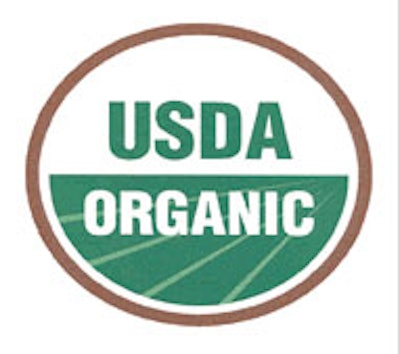
The organic seal will hit grocery shelves in the summer of 2001, with full implementation of the rule by mid-2002. USDA’s organic standard preempts other state and private standards. Products qualifying for the organic seal must originate from farms or handling operations certified by a state or private agency accredited by USDA. The standard bans the use of genetic engineering methods, irradiation and sewage sludge for fertilization. Products labeled “100 percent organic” must contain only organically-produced ingredients. Products labeled “organic” must consist of at least 95% organically-produced ingredients, with the remaining 5% consisting of either nonagricultural substances or those not commercially available in organic form. Processed products containing at least 70% organic ingredients may be labeled “made with organic ingredients” and list up to three of the organic ingredients or food groups on the principal display panel. The percentage of organic content and the certifying agent seal or mark may be used on the principal display, but the USDA seal cannot be used anywhere on the package. Any product labeled organic must identify each organically-produced ingredient in the ingredient statement on the information panel. The name and address of the certifying agent must be displayed on the information panel. In announcing the new standard, then-Agriculture Secretary Dan Glickman stressed that the organic seal is a marketing tool and does not imply that products are safer or more nutritious. USDA declined a request by the National Food Processors Assn. to include a disclaimer with the seal to that effect. It did, however, remove the word “certified” from the seal. While applauding the new rule, both NFPA and the Grocery Manufacturers of America expressed concern about possible consumer misinterpretation of the USDA seal. GMA called on USDA to conduct post-market consumer research to monitor public understanding of the new seal. If consumers indicate they think the foods containing the seal are safer or better than other foods, the seal should be redesigned or removed, said GMA.