Over half of CPG companies cite limited warehouse space and aging facilities as their biggest obstacles to automation investment, with many operating buildings nearly 100 years old that lack modern infrastructure.
- 55% of CPGs report that space and layout difficulties are the primary barriers to warehouse automation investment
- Many CPG warehouses are decades old, with some approaching 100 years of age and designed without modern automation in mind
- Physical constraints like uneven flooring and cramped layouts prevent deployment of mobile robots and other automated systems
- Pandemic-era decisions to use warehouse space for packaging operations have created bottlenecks and new facility demands
- CPGs are addressing space challenges through new warehouse construction, third-party logistics partnerships, and facility redesigns
Warehouse automation can offer a major boost to manufacturing efficiency, but it leaves CPGs pinched on where to put it.
That’s according to PMMI Business Intelligence’s 2023 report “Packaging and Automation in the Warehouses of the Future.” Among CPGs surveyed for the report, the biggest roadblocks from investing in new automation were difficulties relating to available space and layout. It impacted over half (55%) of respondents’ automation investment decision-making.
Many CPGs, particularly those based in the Northeast, still use warehouse facilities built decades ago that weren’t designed with large-scale automation in mind.
“Some plants are close to 100 years old; they weren’t designed with modern-day warehouse flow in mind,” explains one CPG representative interviewee.
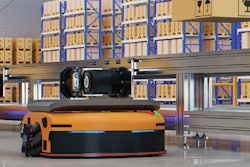
For many, the problem is the small size of warehouses. But there are other issues, including uneven flooring, which rule out the use of mobile robots.
Once these warehouses are at capacity, CPGs need to look at investing in new warehouse space, which can have high costs if the company is based near an urban area. They can also leverage the use of third-party logistics (3PL) companies and using their available warehousing space.
“We are in our own plant sites […] some of them have been there for 60 years, so floor systems, floor structures, transitions between levels add to the complexity,” a CPG executive says about their company’s hesitancy on automation. “And even how we currently make use of the space we have and where we have packaging laid out versus what it ought to be. In other words, we may need to reinvent how we use warehousing and how we flow product through warehousing.”
Pandemic-Era Decisions Hinder Warehouse Automation Efforts
Some CPGs used their warehouse space for their packaging operation during the COVID pandemicto keep up with their expansion. Now, these companies are experiencing floor space problems.
“The easiest short-term model was to steal a warehouse space and put processing and packaging systems in the warehouse,” explains an interviewee from a mid-size CPG. “Now that’s created bottlenecks from an internal warehouse storage perspective, which has created the demand to build new warehouses downstream, which everybody seems to be doing right now.”
Source: PMMI Business Intelligence, 2023 Packaging and Automation in the Warehouses of the Future
Download the FREE executive summary below.