Matt Reynolds, Packaging World
Hi, I'm Matt Reynolds, editor of Packaging World magazine, and I'm here at PACK EXPO. It's not often when I'm at these booths that I get to see the actual brand owners and CPGs and food and beverage producers that are actually using the equipment. I'm always talking to the suppliers. So today I'm here with Ben McCafferty. Ir Ben McCafferty, am I pronouncing that correctly?
Ben McCafferty, 3 Fish:
You are. Yeah, good job, Matt.
Matt Reynolds, Packaging World:
So he's with Three Fish, does a lot of private label food products. Why don't you tell me a little bit more about your operation, what you do?
Ben McCafferty, 3 Fish:
Sure. So we've been around for 50 years. We're right outside of Charlotte, North Carolina. We do value add products, so we do everything from crab cakes, empanadas, and then we do USDA products as well for a lot of large grocery chains that we do private label for.
Matt Reynolds, Packaging World:
Okay. And what does your packaging operation look like just in general?
Ben McCafferty, 3 Fish:
So we're a smaller company, so a lot of what we do is we hand form, handmade products, and then we have more automation on the packaging side.
Matt Reynolds, Packaging World:
Okay. So the hand processing is something that differentiates you in the marketplace?
Ben McCafferty, 3 Fish:
Absolutely. Yeah. It allows us to stand out. It allows us to help make our products a little bit better. It also adds a lot of value to the customer. So it's more of a home style feel that you would get versus a "cookie cutter" type idea. It's been
Matt Reynolds, Packaging World:
Stamped out of a press or…
Ben McCafferty, 3 Fish:
Something. Yeah, exactly. Yeah, exactly.
Matt Reynolds, Packaging World:
Good, good. So do you have several packaging lines, two, three, four?
Ben McCafferty, 3 Fish:
We do. We have three different packaging lines. We do a whole bunch of different varieties of packaging, which is part of the reason why we like coming to the packaging show. I like to keep up on what's happening and some of our products need to be less automated, some need to be more automated. So just depending on that, that's part of what we like to see at the packaging show.
Matt Reynolds, Packaging World:
Okay. And so you've been walking the aisles. What's stood out to you? What have you been gravitating towards? Any particular technologies or capabilities?
Ben McCafferty, 3 Fish:
Yeah, I mean the cobots are a big thing. I mean, for probably the last 10 years you've seen robotics and cobots actually coming in, as well as being able to get data out of your machines and being able to have AI analyze that is a big deal for us as well.
Matt Reynolds, Packaging World:
Okay. So you're kind of in an exploratory phase right now?
Ben McCafferty, 3 Fish:
We are. Part of the reason we like to come to the Pack Expo is one, we like to touch base with a lot of our vendors and having them all in one location definitely makes it a lot easier for us. And there's a lot of times there's folks that you may not get to see. You also get to reacquaint yourself with different folks as well. And then being able to see what's coming. So part of my job as a vice president is to look at what's coming down the road for us in the company over the next one year to five years and seeing what's actually out there right now helps us be able to make some of those decisions.
Matt Reynolds, Packaging World:
Okay. Now you mentioned cobots. It's interesting because you have an operation that kind of prides itself on being a handmade or a human made. So if you are going to go with a high end automation that is a robotics, you need to have one that's working in close proximity with your staff.
Ben McCafferty, 3 Fish:
Absolutely. Absolutely. So a lot of what we do is more on the forming, making the kitchen reps. Yeah. And then downstream more on the packaging side, we're a little bit more open to the automation, but you are absolutely right. The cobots for us anyway, make more sense right now versus a robot just so that they are working close with somebody.
Matt Reynolds, Packaging World:
And then for a handmade speeds, feeds and stuff, you might not need 5,000 a minute or something like that. The cobot speed, it's intended to be roughly a slower speed, but a lot more flexibility, versatility, you can move it from line to line.
Ben McCafferty, 3 Fish:
It does. It's also that we're noticing the pricing is also getting better. So the ROI used to be several years. Now we're seeing ROIs a lot of times, especially if you're multiple shifts like we are, seeing those come down in like a year, year to a year and a half a lot of times, which that cost coming down also makes it a lot more appetizing to be able to go for it.
Matt Reynolds, Packaging World:
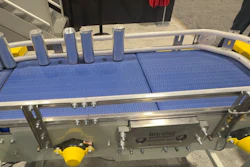
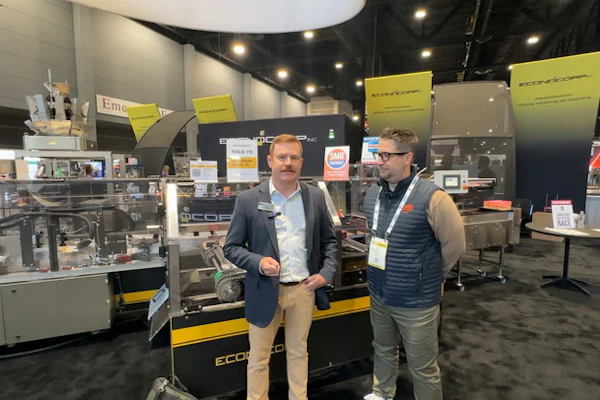
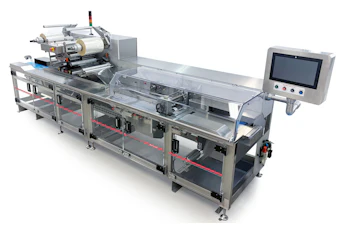
I can imagine. I can imagine. And you also mentioned data. We're standing in front of a new machine. The machine isn't entirely new, but it's taken out a lot of mechanical and put in a lot of servo to replace it, which means a lot of data harvesting can happen. This at Econocorp, this is the Pegasus. So is that something that you're looking at, being able to take all this data and actually act on it, make it actionable and maybe perhaps use AI or some of the platforms that are here at PacExpo to do
Ben McCafferty, 3 Fish:
So? Yeah. I mean, we're already a customer of EconoCorp and they're fantastic. So the reason I'm here is more looking at what the next step is and definitely the data coming out and then having AI go through it. Sometimes if you get too much data, it often feels overwhelming. And sometimes it may not even be valuable to you depending on what you're looking for. And so having AI be able to take that, summarize it for you, and then get to the points that actually make sense so you can get out to the floor and help people, because really at the end of the day, that's what it's for. It's to actually help you. It's not just collecting data for data's sake. It's actually to help the people on the floor, help us to be more efficient, help us to be better business owners.
Matt Reynolds, Packaging World:
Okay. So it's looking for a signal in the noise that is big data.
Ben McCafferty, 3 Fish:
Yeah, exactly. No, no, that's exactly right.
Matt Reynolds, Packaging World:
It's a signal of the noise that you can act upon too. It's not just being able to recognize things, but correct things, improve things, continuous improvement.
Ben McCafferty, 3 Fish:
Yeah, absolutely. We want to continually improve. We want to drive costs down, obviously, pass those savings onto our customer. But sometimes if you get just too much data and you're not really doing anything with it, then sometimes I think that's one of the issues over the last few years that we've seen is you can just get a lot of data and then if you're not doing anything with it, it adds no value to the company. So being able to get that data out, have AI help you simulate that, digest it, and then be able to make improvements is very, very important for us.
Matt Reynolds, Packaging World:
Okay. So anything I should be looking for on the show floor that you've seen that really stood out to you? You're welcome to name names.
Ben McCafferty, 3 Fish:
Yeah, I won't do that, but there's a lot of great stuff. I think one of the nice things is you see things that we maybe not even look for. So I've got a couple of my managers with me and that's one of the things I tell them is even though it may not make sense for us right now, just saying hi to the vendors, saying hi at the different booths, you end up discussing things and you're like, "Oh, wait a minute. We didn't even think about that. There might be some value there." So yeah, overall the show has been fantastic this year.
Matt Reynolds, Packaging World:
Good. So the plane ride home is going to be ruminating on a lot of what you saw here.
Ben McCafferty, 3 Fish:
We've already been doing that every night at supper. So yeah, there'll definitely be a lot more of that. And then a lot of discussion over the next couple of weeks for sure.
Matt Reynolds, Packaging World:
Good. So a handshake and a hello here becomes a PO six months from
Ben McCafferty, 3 Fish:
Now. It absolutely can. Yeah, for sure. And even sometimes even a little bit farther. And it helps us even to say, "Hey, we didn't even think about that in our business. Maybe we need to be thinking about going a different direction that's going to add value to us."
Matt Reynolds, Packaging World:
All right. Any new packaging problems that you're also trying to solve at all? Any kind of packaging specific, whether you're looking into new formats, different...
Ben McCafferty, 3 Fish:
So part of the reason we're even talking to Econocorp is the fact that we're looking at some different club stores that are talking to our sales teams right now.
Matt Reynolds, Packaging World:
The larger format.
Ben McCafferty, 3 Fish:
Yeah, exactly. And so because of that, that's also part of it because currently we don't do that. We do smaller CPG type products. And so having more of that club pack, that's also the other thing I'm wanting to make sure that we've got figured out before sales comes to us and says, "Hey, we've got a PO in three months we're going to market. What's your plan?" So that's the other reason we're here.
Matt Reynolds, Packaging World:
Good. Well, I've taken up too much of your time already.
Ben McCafferty, 3 Fish:
No problem, Matt.
Matt Reynolds, Packaging World :
We'll be in touch for a possible story on 3 Fish and what they're doing with major retailers. You know the usual suspect retailers that they're doing some of their products for, and you can look for that eventually in the pages of Packaging World Magazine. So thanks, Ben. Appreciate the time.
Ben McCafferty, 3 Fish:
My pleasure.