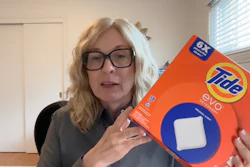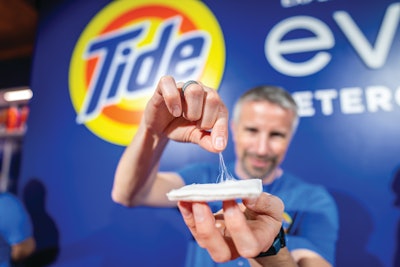
Tide evo's revolutionary detergent tiles are concentrated soap pads that replace plastic bottles and liquid detergent, packaged in recyclable paperboard cartons to reduce water, weight, and carbon footprint.
- Tide evo tiles are water-dissolvable pads made of tens of thousands of microscopic soap layers without liquid fillers or plastic bottles
- Each tile contains six layers of 100% concentrated cleaning ingredients woven into individual fibers for maximum efficiency
- Tiles come in 16-, 22-, 30-, and 44-count cartons made from FSC-certified recyclable paperboard instead of plastic
- Manufacturing uses 100% renewable wind-powered electricity with zero waste to landfill and minimal transportation carbon footprint
- One or two tiles placed in the washing machine drum deliver Tide-level cleaning in cold water with less water and energy needed
 Ben Miyares, Packaging Sherpa
Doing away with liquid laundry detergent bottles at retail, lightening loads in domestic households, and easier package handling in both places are three of the intended consequences of the compact, lightweight tiles.
A fourth, less obvious–but potentially no less significant impact of the disruptive packaging switch–is its role in smoothing the new brand’s entry into the e-commerce market, where cube and light weight are primary requirements.
“We wanted to create a detergent that effortlessly fits into busy lives, prioritizes sustainability by eliminating water and fillers, and, most importantly, adds a touch of enjoyment to the laundry process,” says Ammie Walter, senior brand director of P&G’s Tide evo.
What they came up with is what P&G calls “a revolutionary new form of laundry detergent”: A soft, lightweight water-dissolvable pad (P&G calls it a tile) woven of “tens of thousands of miniscule layers of soap without unnecessary liquid and fillers.” The dry tiles also eliminate the need for plastic bottles. If consumers find laundry tiles preferable to their bottled liquid precursors, we could see other P&G detergents–and conceivably the entire laundry detergent category–transformed in the name of sustainability.
“We set up to deliver the most concentrated laundry detergent to deliver Tide level of cleaning in cold water with the minimum amount of weight,” says Marcello Puddu, P&G’s R&D senior director. “We have been able to deliver this, and it has also allowed us to minimize carbon footprint with recyclable FSC paper packaging, minimizing product transportation energy.”
The “new to the world” patented process for making the fibrous tile at the core of the Tide evo laundry detergent innovation consists of six layers of “100% concentrated cleaning ingredients woven into each individual fiber.”
Tiles are stacked snugly into paperboard trays that nestle into rounded-corner, hinged-lid cartons featuring zipper tear strip opening and click tab reclosure. The paperboard cartons are made in 16-, 22-, 30- and 44-tile counts.
Tiles are made in the U.S. in a facility with 100% renewable wind powered electricity and zero manufacturing waste to landfill. and packed in Forest Stewardship Council certified recyclable paperboard cartons, “eliminating the need for a traditional plastic bottle,” says the company.
In addition to instructing consumers to place one or two tiles “in the bottom of the empty washing machine drum” cartons carry the Sustainable Packaging Coalition’s “How2recycle” instructions for paperboard cartons.
Ben Miyares, Packaging Sherpa, is a packaging market and technology analyst and is president of The Packaging Management Institute, Inc. He can be reached at [email protected].