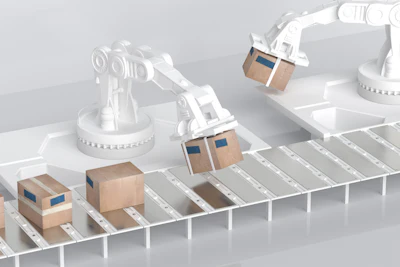
Automation literacy is rapidly becoming a core skill requirement across all OEM roles, not just specialists. Companies that treat robotics education as an ongoing workforce investment gain competitive advantage in packaging, processing, and modern manufacturing.
- Automation literacy is shifting from specialized to baseline—operations, sales, and business leadership roles now need robotics understanding
- Knowledge gaps create operational bottlenecks at handoff points during system implementation, troubleshooting, and optimization
- Workers don't need deep technical expertise—they need practical understanding of how robotics supports production lines and how to respond when issues occur
- OEMs should prioritize usability and simplicity in machine design, interfaces, and training to support broader user adoption
- Cross-functional integration is increasing—robotics, vision systems, and controls are merging, requiring teams with broader foundational knowledge
Robotics is expanding rapidly across industries, but most of the workforce still lacks a clear understanding of how these systems work or where they create value. “Automation literacy” is quickly becoming a baseline skill, not a specialized one. The Association for Advancing Automation (A3) is seeing growing demand for robotics knowledge across roles that traditionally haven’t needed it, including operations, sales, and business leadership.
As one example of this shift, A3 just launched a new Introduction to Industrial Robotics course designed to give professionals a practical, vendor-neutral foundation in just a few hours. The on-demand program is designed to help professionals across industries build a foundational understanding of robotics as automation adoption continues to accelerate.
OEM spoke with Alex Shikany, Executive Vice President for A3, about the impact this current state of robotics has on the packaging and processing sector.
OEM: In packaging and processing environments, where are you seeing the biggest gaps today in understanding how robotics actually fits into production lines?
Shikany: A big part of it is still helping companies connect the dots between robotics and the business outcomes they care about most. In packaging and processing, these tools are no longer something futuristic or reserved for only the largest manufacturers. There are increasingly practical ways to improve throughput, consistency, and flexibility. The broader point is that automation is becoming a bigger part of how companies stay competitive in a fast-moving global market, and that understanding is still catching up in some areas.
OEM: Many packaging professionals aren’t robotics experts. What do operators, line managers, or plant leaders really need to understand to work effectively with automated systems?
Shikany: They do not need to be experts in programming or system design. What they need is a solid working understanding of what the technology is doing, how it supports the line, and how to respond when something is not operating as expected. That kind of comfort level matters more and more because these are the kinds of tools people will increasingly be expected to work alongside throughout modern manufacturing. In many cases, newer workers may actually be more eager to engage with these systems than with older production methods.
OEM: How is the rise of robotics, especially in applications like case packing, palletizing, and pick-and-place, changing workforce expectations on the plant floor?
Shikany: It is reshaping expectations in a pretty meaningful way. Companies are placing more value on adaptability, problem-solving, and a willingness to learn new systems, even in roles that historically may not have required much exposure to automation. At the same time, many workers are looking for environments that feel more modern and forward-looking. Robotics can play an important role there, not just in boosting efficiency, but in making these jobs feel more aligned with where industry is headed.
OEM: Where does a lack of robotics knowledge most often create bottlenecks in packaging operations, whether during implementation, troubleshooting, or optimization?
Shikany: Usually at the handoff points. When a system is being introduced, when an issue comes up on the line, or when a company is trying to get better performance out of equipment already in place, gaps in understanding can slow things down. The technology may be capable, but if the broader team is not comfortable with how it fits into the operation, it becomes harder to move quickly and confidently. That is one reason education has become such an important part of the conversation.
OEM: For OEMs building packaging machinery, how should this shift toward broader automation literacy influence machine design, user interfaces, and training approaches?
Shikany: I think it puts even more emphasis on simplicity and usability. Customers still want powerful machines, of course, but they also want systems that are approachable, easier to learn, and easier to operate across a wider range of employees. That applies to interface design, training, diagnostics, and the overall user experience. As automation adoption expands, there is real value in helping customers build confidence faster and get up to speed without feeling like they need a deep technical background.
OEM: Are you seeing more demand for cross-functional understanding, for example, operators needing to understand vision systems or basic programming, and how should companies respond?
Shikany: Yes, that is becoming more common. As systems become more integrated, the old boundaries between robotics, vision, controls, and software are not quite as clean as they once were. Customers are increasingly looking for solutions, not discrete technologies in a vacuum. Most companies are not looking to turn every operator into an engineer, but they are recognizing the benefit of teams having a broader base of understanding. That is a smart response to the direction the industry is going, especially as automation becomes more central to day-to-day operations.
OEM: Looking ahead, what practical steps should packaging companies take now to ensure their workforce can keep pace with increasing automation?
Shikany: Start early and make it part of the culture. The companies that seem best positioned are the ones treating automation literacy as an ongoing workforce investment, not a last-minute response to a new machine purchase. That can mean training, hands-on exposure, and simply creating more familiarity across the organization.