CiPPPA launched a UK pharmaceutical take-back program enabling patients to return used packaging at pharmacies, hospitals, and care homes for recycling through reverse logistics. The initiative represents pre-competitive collaboration among pharma companies to embed circular packaging practices before 2035 regulations take effect.
- CiPPPA's take-back program allows patients to drop off used pharmaceutical packaging at pharmacies, hospitals, care homes, and prisons for recycling and reuse
- The program uses reverse logistics from healthcare distribution networks to centralize materials and send them to recyclers without requiring behavior changes from consumers
- CiPPPA aims to establish recycled content in primary pharmaceutical packaging within three to five years through regulatory collaboration and gap analysis
- Pre-competitive collaboration enables pharma companies to work together on packaging sustainability without impacting commercial competition, similar to Colgate's open-source recyclable tube design
- The initiative is an at-scale implementation, not a pilot, designed to position the industry ahead of Extended Producer Responsibility (EPR) and Deposit Return Scheme (DRS) regulations expected by 2035
Sustainability in pharmaceutical packaging is rarely simple. The complexity of materials and regulatory frameworks surrounding things like blister packs, inhalers, and injectables make them especially difficult to include in talks around circularity.
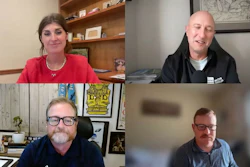
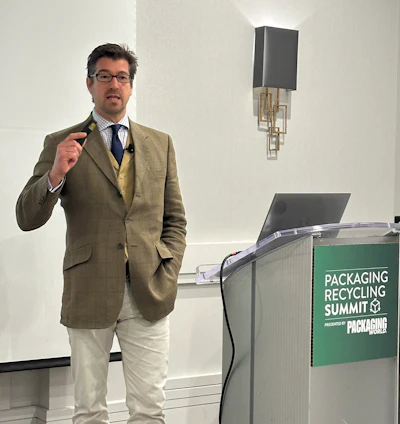
The Circularity in Primary Pharmaceutical Packaging Accelerator (CiPPPA), a collaborative not-for-profit initiative, aims to change this dynamic and is launching a U.K. pharmaceutical packaging take-back program as part of this goal. The take-back program helps the industry stay ahead of sustainability regulations, according to Duncan Flack, chairman at CiPPPA and global sustainability lead at Honeywell, who spoke at the 2025 Packaging Recycling Summit in late June.
“Instead of waiting for EPR and DRS to come up and bite us in 10 years’ time, how much better for the industry to be taking proactive steps, so that come 2035 when all these things fall into place, we can say we’re on top of this, and we’ve got solutions in place,” said Flack.
How the take-back program works
CiPPPA’s take-back program is designed with consumer convenience as a priority, minimizing the need for changes in consumer behavior to participate. In the program, wherever patients pick up their prescriptions, whether it’s a pharmacy, care home, hospital, or prison, they can drop off used packaging for recycling.
“We then use a series of reverse logistics from the healthcare distribution agencies that are dropping drugs off at these places on a daily basis, bring all those materials back to a centralized location, send them on to the respective recyclers, and then the materials get reused elsewhere,” said Flack.
In the short term, CiPPPA is running a gap analysis to identify best practices for scaling. It then plans to work with regulators to enable the use of recycled content in pharmaceutical packaging materials and ensure that its program is delivering at scale. Come three to five years from now, the goal is to establish the use of recycled content into primary pharmaceutical packaging, further embedding the principles of circularity in pharmaceuticals.
This is no pilot, explained Flack. He said plenty of pilots and trials have been conducted in the past, and emphasized, “what we’re doing is building on the back of those trials and pilots to implement at-scale solutions.”
And the simplicity is key in this equation, as Flack said, “if you make this solution complex and difficult for people, it’s never going to fly.”
Pre-competitive collaboration to promote sustainability
Central to CiPPPA’s model is the concept of pre-competitive collaboration, where pharmaceutical companies work together in areas that don’t impact their commercial competition, namely packaging.
Flack pointed to Colgate’s decision to open-source its recyclable toothpaste tube design as a model. “I love [the Colgate case study] because of its boldness, its simplicity,” said Flack. “The fact that it shared its IP open source to all of its competitors was such a bold and positive step.”
Take-back programs are one step to support pharmaceutical circularity. But to standardize the recyclability of pharmaceutical packaging and the effectiveness of such programs, pharma stakeholders need to get on the same page, like Colgate and its competitors.
“If you have disparate groups all talking about different topics or similar topics in a slightly different way at a slightly different time, then it just becomes a bit of noise,” said Flack. “Whereas, if everybody’s talking about the same topic in the same way at the same time, then it becomes a little bit more deafening.”