Three companies are leading sustainable packaging innovation with certified compostable products: SayHay's plant-based straws, My Sweet Salad's compostable tomato packaging, and Incredible Eats' agricultural waste-based wrapping paper.
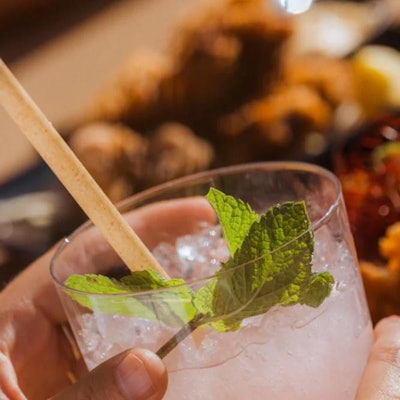
- SayHay's plant-based straws are certified home and industrially compostable by BPI and TÜV Austria, free from plastic, PLA, and PFAS, and dishwasher safe.
- My Sweet Salad's compostable pack replaces plastic clamshells with renewable sugarcane-based materials for cherry tomatoes, featuring QR codes for product traceability and sustainable farming information.
- Incredible Eats' Regen Paper uses agricultural residue instead of trees, with a 3–4 liter water footprint per kilogram compared to 200–250 liters for traditional OGR paper.
- All three innovations are certified to decompose without generating microplastics or toxic residues and represent significant investments in bio-based packaging research.
These examples underscore the high level of research and investment directed towards bio-based packaging solutions.
Learn more about ThePackHub's Innovation Zone here.
SayHay's reusable plant-based straws offers a compostable alternative to plastic
SayHay, based in the Netherlands, has developed a line of reusable drinking straws made from plant-based materials as an alternative to conventional plastic straws. The straws are certified home compostable by both BPI in North America and TÜV Austria in Europe, ensuring compliance with recognized standards for biodegradability in domestic environments. The product is designed to break down without leaving microplastics and is free from plastic, polylactic acid (PLA), and polyfluoroalkyl substances (PFAS). The straws are also industrially compostable and have a verified carbon footprint, though the specific measurement is not disclosed. Suitable for both hot and cold beverages, the straws offer a reusable option that is dishwasher safe and resistant to becoming soggy, an issue common with some paper-based alternatives. SayHay promotes these straws as being used by multiple brands, although no specific partnerships are detailed. The company positions the innovation as part of a broader effort to reduce plastic waste by introducing fully biodegradable packaging solutions.
 The pack features a GS1 standard 2D QR code, allowing consumers to access information on the product’s origin, certifications, traceability, and sustainable farming practices.ThePackHub
My Sweet Salad launches compostable tomato pack
My Sweet Salad, a Brazilian brand under Sakata, has launched compostable packaging for its Sweet Grape cherry tomatoes, marking what is claimed to be the first compostable solution targeted specifically at the fruits, legumes, and vegetables (FLV) segment in Brazil. The new pack replaces the traditional plastic clamshell with a sealed tray format made from renewable sources, including sugarcane-based materials, and is protected by a printed film similar to those used in dairy packaging. Developed in partnership with ERT Bioplásticos, the packaging is designed to decompose without generating toxic residues or microplastics. This transition aims to reduce the environmental impact of tomato packaging without increasing production costs. The pack also features a GS1 standard 2D QR code, allowing consumers to access information on the product’s origin, certifications, traceability, and sustainable farming practices. Benefits include enhanced shelf visibility due to transparent materials, optimized logistics through a more streamlined packaging process, and improved storage and transport performance. The compostable pack is currently available in retail locations across Rio Grande do Sul and is expected to expand to additional regions in Brazil.
 Regen Paper is designed to be formable into various shapes, with development underway to incorporate a seaweed-based coating expected by the fourth quarter of 2025. ThePackHub
Incredible Eats wrapping paper uses agri-residue and seaweed-based coating
Incredible Eats, a company based in India, has introduced a new wrapping paper product under the name “Regen Paper” that targets the food service industry. The innovation is made entirely from agricultural residue, primarily bagasse, making it a tree-free alternative to conventional paper products. The material is free from PFAS chemicals and features resistance to oil, grease, and sauces, while also being microwavable, recyclable, and repulpable. Printing is achieved using soy and water-based inks to minimise chemical use. Regen Paper is designed to be form-able into various shapes, with development underway to incorporate a seaweed-based coating expected by the fourth quarter of 2025. The coating currently used is a non-cellulose, water-based biopolymer. In terms of environmental performance, the product claims a significantly lower water footprint (3–4 liters per kg) compared to traditional OGR (Oil and Grease Resistant) paper (200–250 liters per kg) and plastic sheets (over 250 liters per kg). Similarly, the carbon footprint is stated to be low, with Regen Paper claimed to generate 200% less CO₂ equivalents and eligible for carbon credits. From a compostability standpoint, the product breaks down in days to weeks, contrasting with the slower decomposition of conventional materials.
Learn more about ThePackHub's Innovation Zone here.