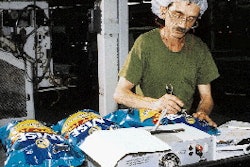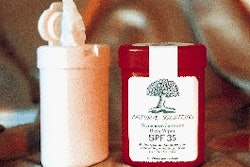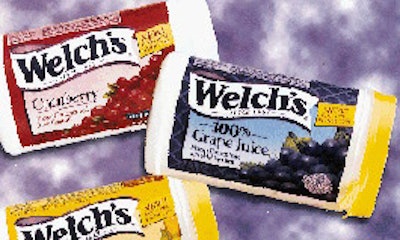
The blow-molded, high-density white polyethylene canister and its mate, an injection-molded linear low-density PE easy-open closure, are produced by Graham Packaging Co. L.P. (York, PA). Graham also decorates the cans, using eight-color gravure heat-transfer decorating. Decorating equipment and heat-transfer material are supplied by Dinagraphics (Cincinnati, OH). Among other firsts, the new cans are packaged at Welch's plant in North East, PA, on a totally new line, including a first-of-its-kind 800/min capper designed by Fowler/Zalkin (Athens, GA). The new container's tabbed closure is described as a "modified snap-fit" style. It's easy to open, and the product can be defrosted in a microwave oven in 90 seconds or less. These features eliminate the two most prominent reasons for dissatisfaction that consumers had with the previous package. When empty, the plastic canister can be recycled with other HDPE containers, unlike the steel/paper/foil composite cans used previously. "The retailer reaction has been great," says Randy Papadellis, Welch's vice president of marketing. "We think this is the most significant package change since the peel strip in 1979." The lengthy development program is also a testament to the economics of the composite can. "To make a plastic package that will perform as well was, until now, cost-prohibitive," says Roger Prevot, senior vice president and general manager of Graham's food and beverage business unit. "We're not fully price-competitive yet, but our goal is to offer a package that's both consumer-preferred and lower in cost." Papadellis confirms that the economics are "reasonably comparable" to the composite can and points out that the new cans sell for the same price as the composite cans they replace. Graham uses a wheel-type extrusion blow molder that was first developed for producing drinkable yogurt containers in Europe. It's producing the Welch's can at speeds above 250/min, Prevot says. Neck trimming is similar to the technology used for wide-mouth detergent bottles that later receive a pour spout. However, creating a closure that's low in cost, easy to open and leak-resistant was critical. In fact, a patent has already been awarded on the closure system, and Graham has an exclusive license on a process patent that's used in manufacturing the closure. "Once we got the container worked out, there was a whole series of new operations put together for the first time in the industry," says Marion Williams, Welch's senior vice president of technology. It included on-line seal integrity inspection of all cans, done by a system from Taptone (N. Falmouth, MA). "This is the first time it's been done this way," says Williams. "What's critical is that the internal pressures are just as important as the external pressures." The new packaging line also played a role in the lengthy development. Or as Williams puts it, "New, 'new' technology can be a competitive advantange. On the other hand, it adds time to the process." According to Welch's market research, the new plastic can's convenience was overwhelmingly appreciated by consumers studied.