See What’s Possible in Packaging & Processing @ PACK EXPO International
See packaging & processing solutions from 2,700 exhibitors and gain insights from 150+ free educational sessions at PACK EXPO International.
REGISTER NOW

Create a free Packaging World account to continue reading

Turning the shoe industry on end

Italian shoemaker challenges packaging conventions by adopting a vertical gable-top package that resembles both a doctor's bag and a milk carton. Patented carton design offers environmental advantages in waste-conscious Europe.

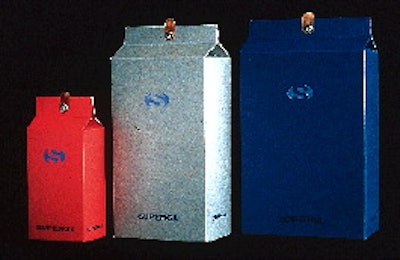
These mock-ups of the Superga package were photographed without the label that describes the style, size and color of shoe.

Superga of Turin, Italy, has every reason to fiercely embrace tradition. After all, the manufacturer of rubber-soled sport and casual shoes began as a supplier of rubber tires to Fiat. And those were bicycle tires before Fiat began to build automobiles. This year, the company introduced a broader line of shoes packaged in an innovative new one-piece vertical box. The patented box design and closure is the product of industrial designer and architect Daniel Weil, a partner in an international design consultancy, Pentagram (New York, NY). He credits what he calls "visionary management" at Superga for introducing the new package. It is cost-efficient, durable, collapsible, stackable and it can be reused in the home or recycled, Weil says. It's not only a design change, it's also more protective than the conventional two-piece shoe box. Superga's previous packages were the conventional paperboard boxes that were decorated with three- or four-color printing. "Historically, the old shoe box was made with a good grade of material, and it was frequently reused," Weil says. "But, over time, cheaper materials were used and the strength of the box suffered." Still, Superga's objective was new packaging that would distinguish its brand as the company sought to extend its products from natural rubber-soled athletic shoes into casual, leisure shoes. The new design is also used for Wellington rubber-soled boots. "No packaging system should be accepted as a given," Weil says. "The designer's job is to look for a new perspective, to question pack-aging processes that may have been unchanged for generations, to revisit solutions with a fresh eye and from a contemporary cultural angle. This is the recipe for creating packaging as a 'dynamic expression of the brand.'" This package is based on the geometry of a milk or juice carton, and employs the snap opening device common to doctors' medical bags. The new package is fabricated from wet-strength paperboard, the same material that is used for multipacks for beer. It's supplied by Rexam Foil & Paper U.K. (Middlesex, England). It's very durable, Weil says, and it accepts the design colors well. Rexam converts the board into the package, adds the unusual clasp at the top and ships the cartons flat to Superga for manual loading. Eventually, a pressure-sensitive label is placed on one of the gable sides that displays the bar code, style, size and other necessary information (the photo shown was taken before the labels were completed). Interlocking base What permits the box to be shipped flat is an interlocking base design that allows it to be collapsed and set up easily. The patented closure is a snap fastener that is released by pulling on a rubber tab, an appropriate material for the shoe manufacturer. The opening device, and the absence of a box lid, simplifies the work for the store clerk. Instead of taking the box off a shelf and removing the lid to retrieve the shoes for a customer try-on, the clerk simply opens the end of the box and slides the shoes out. Weil even added a little feature here. The new box is constructed with the rough side of the paperboard on the outside, so the shoes slide easily from the box without any chance of abrasion of the shoe finish. Rexam prints the paperboard by flexo in two colors plus foil stamping. The opposite side that becomes the inside of the package is printed in one color to make it seem the color permeates the paperboard. Because the gable-top can be folded flat, the package doesn't need to be shipped with the gable upright. That means very efficient cube utilization in transport. Environment wins, too "Everything I try to design looks first at reusability for the sake of the environment," Weil states. "This is what people used to get from shoe boxes when they were well made and were kept to hold photographs or other memorabilia." This is especially important in German markets where people will leave packaging behind at the store unless it can be reused. "We're giving the customer an incentive to take the package with them," Weil says. The reaction in the marketplace has been "massive," according to the designer. "Of course, you have to understand it's the launch of new shoes, so they get the most credit for the sales. But this packaging provides more than just a container for them. It reinforces in people's minds the idea that the shoes are really new. The package says 'this is something really different.'"

Co-packers: the competitive gap is widening
Brands want more than low bids. See what automation, services, and sustainability mean for CM/CPs in 2026.
Read More
Co-packers: the competitive gap is widening
Discover How to Stay Ahead of the Competition at PACK EXPO International
See new solutions from 2,700 exhibitors. Gain insights from 150+ free educational sessions. From automation & robotics to real-time data insights, find the tech for your company’s future at North America’s largest packaging & processing event.
REGISTER NOW
Discover How to Stay Ahead of the Competition at PACK EXPO International