The Flexible Packaging Association’s (FPA) recent report,“A Holistic View of the Role of Flexible Packaging in a Sustainable World,” highlights the sustainability benefits of flexible packaging. FPA commissioned PTIS, LLC to provide a holistic view on the sustainability benefits that flexible packaging offers and foresight into future sustainability implications for the format, and to develop six Life Cycle Assessment case studies comparing flexible packaging to other packaging formats across a range of products.
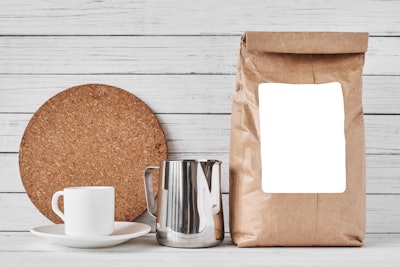
Coffee is a popular beverage, and ground coffee is packaged in a variety of package formats. For the LCA case study, the flexible stand-up pouch, steel can, and rigid plastic canister formats were evaluated for their environmental impacts with a cradle-to-grave boundary.
Among the results:
- The steel can uses 16-times as much water as the flexible stand-up pouch, mainly during the material development stage, as large amounts of water are used during the cooling process in the formation of steel.
- The rigid plastic canister consumes two-times as much water as the flexible stand-up pouch due to water usage during the injection-molding process.
- The production of steel cans and the rigid canister both require much more energy and have higher carbon emissions in the manufacturing or conversion stage. The carbon impact is lower for a lighter-weight flexible stand-up pouch that holds more of the product and uses less material. The rigid canister and steel can respectively emit four-times and seven-times more greenhouse gas emissions than the flexible pouch.
- A flexible pouch has lower overall fossil fuel usage. A steel can and rigid canister use 453% and 518% more fossil fuel, respectively, than a flexible stand-up pouch.
Given the results, the stand-up flexible pouch is shown to have a more favorable environmental outcome from a carbon impact, water consumption, and material-discarded position than the other ground coffee packaging formats. This is driven by the flexible stand-up pouch’s lower amount of packaging material, which results in a favorable product-to-package ratio.
The LCA case study was developed using EcoImpact-COMPASS® LCA software, which allows for quick life-cycle comparisons between different packaging formats.