Humanoid robot adoption depends on matching the right form factor to specific workflows rather than choosing one winner. Success requires organizational alignment, realistic expectations about current capabilities, and substantial real-world data to improve reliability.
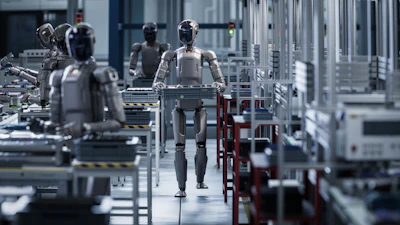
- Legs vs Wheels: Wheeled humanoids offer established safety and efficiency for early adoption, while legged robots provide advantages in obstacle navigation and whole-body control but face deployment challenges.
- Organizational Alignment: Automation projects fail without buy-in from operations, finance, and executive teams; people-centric approaches are essential for long-term success.
- Data Requirements: Industry experts remain uncertain about the exact volume and variety of data needed to achieve 99.9% reliability in manufacturing environments.
- Realistic Deployment: Early humanoid pilots should target applications with meaningful value in low-disruption areas while building operator confidence and buy-in.
(See what humanoid robot stakeholders had to say during day one of the Humanoid Robot Forum)
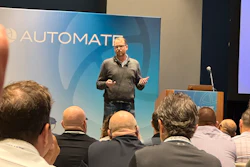
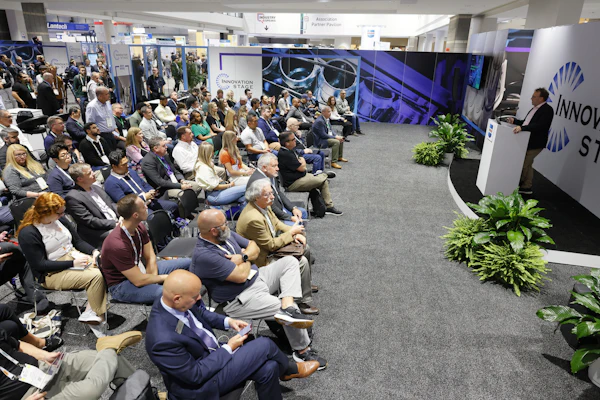
Humanoid robotics adoption may depend less on choosing a single winning form factor and more on matching the right system to the right workflow. Industry stakeholders shared how they are working toward scaled humanoid deployment Wednesday at the Automate Humanoid Robot Forum in Chicago, Ill. Here's what they had to say:
The practicality of wheels, the ambition of legs
A bipedal humanoid robot is an exciting example of science-fiction-turned-reality, but for industrial applications, companies will need to evaluate whether they are the most practical solution. Jeff Cardenas, co-founder and CEO at ApptronikPackaging World
Apptronik’s Apollo humanoid robot is currently offered with both legs and wheels, said Jeff Cardenas, co-founder and CEO of Apptronik, at the Forum Wednesday.
Legs are a future-looking ambition, but wheels are a perfectly efficient option with established safety standards for early adopters, Cardenas explained.
“The more I work around legged robots, the cooler I think they are. The more I deploy legged robots, the more I realize the challenges around deploying them in large volumes to the world,” Cardenas said. “They have the challenge in which they can fall over, so you have to think about safety, which we don’t have to think about as much when we’re talking about wheeled systems.”
Legs can bring unique value to industrial operations compared to wheels though. They can handle obstacles like stairs or gravel more reliably than wheels, but the most impactful benefits come in whole-body control.
Referring to himself as an example for bipedal systems, “Right now, I take up roughly a square foot. If I want to lift something heavy, I can widen my stance. If I want to reach down on the ground, I can bend down on one knee and I’m still roughly a square foot. So, I have a very small footprint in a whole giant workspace of things I can do,” Cardenas said.
The long-term goal is for whole-body control to become reliable enough that users no longer have to worry about humanoids falling over, Cardenas said. But the industry is not there yet, he added, making the push for clear safety standards essential.
Starting automation with alignment
Successful automation projects don’t start and end with the technology. They depend on organizational alignment and a clear understanding of the value the system is expected to deliver. Jon Battles, VP, technology strategy at CobotPackaging World
“You cannot overemphasize the alignment of the organization. You can have engineering, finance, and the executive committee, but if operations is not on board, you’re DOA with your robot project,” Battles said.
Advanced as an automated system may be, Battles emphasized the importance of keeping people at the center of the equation to ensure a well-maintained and reliable operation.
“I had a project at Amazon for an autonomous factory, and we never got to a complete lights-out factory, because that level of technology takes people to operate, maintain, and govern,” Battles said. “We need to define what we’re doing for the people; whether we’re making it safer or taking fatigue off them, it’s people centric.”
Scaling humanoids with real-world learning
Deploying technology as cutting-edge as humanoid robots in industrial settings will require a measured approach and a large pool of data to learn from, speakers shared during the closing panel of the Forum.
Applying these technologies in real manufacturing (L to R) Brian Heater of A3, Ani Kelkar of McKinsey & Company, Erin McColl of Toyota Research Institute, Elizabeth Samara Rubio of Noble Machines, Rebecca Yeung of DexterityPackaging World
“I don’t know that anyone knows how much or what type of data we actually need,” McColl said. “We see the trends that more data and variety make performance better, but we don’t know what the slope of that line is to get to a 99.9% success rate.”
Companies also need to be realistic about where the technology can deliver value today, and how to introduce it into the workforce, said Rebecca Yeung, strategic advisor at Dexterity and former CVP at FedEx.
“One of the key lessons we learned is that you have to get operators on board and get them excited about the technology, because they tend to be risk averse. They want the operation to run,” Yeung said.
Yeung added that companies should focus on applications that can deliver meaningful value, while structuring early pilots in areas where experimentation will cause the least disruption to ongoing operations.