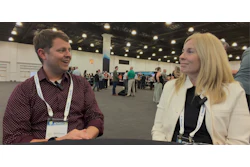
Jan Pingel, director of software automation at Getinge AB, a global health care equipment provider says, “We are looking at ANSI/ISA-S88 and ANSI/ISA-S95 standards because we see that customers require more integration of the machines into their infrastructure.” The company, based in Getinge, Sweden, with a U.S. site in Rochester, N.Y., where Pingel is located, is classified as an original equipment manufacturer (OEM).
“We’re not there [integrated on S88], yet,” states Pingel, “mostly because we are standardized on Rockwell Automation products and we are waiting for the next release of its Logix program development software,” which is supposed to have S88 embedded right out of the box, Pingel says. Another hurdle, Pingel adds, “is a need to integrate with all the systems that are already out there. Customers have not all decided what directions they are going.”
Getinge corporate managers have asked, “What’s in it for us?” Adherence to standards “will make our platform more stable and consistent,” Pingel says.
“Embedding standards such as S88 within our machines makes the software look like firmware to the customer,” Pingel observes. “This should make it easier for the customer to validate start up and future changes to the process. If customers have validated the process with one of our machines, adding another machine for increased production should greatly reduce validation time. This would be a real competitive advantage.”