Cross-sector partnerships and extended producer responsibility policies are significantly boosting can and bottle recovery rates by combining improved collection infrastructure, AI-powered sorting technology, and deposit return systems.
- Every Bottle Back, a $100 million ABA initiative launched in 2019, funds education, access improvements, and upgraded material recovery facilities with AI technology.
- The Can Manufacturers Institute has invested in AI-powered sorting robots at last-chance recovery lines, recovering valuable aluminum cans that would otherwise reach landfills.
- Despite being the most recycled beverage container, over 40% of aluminum cans still end up in landfills in many U.S. regions.
- Extended Producer Responsibility (EPR) legislation is expanding nationally, with seven state EPR laws already passed, creating incentives for better collection and recycling infrastructure.
- Deposit return systems (DRS) combined with EPR policies provide the most effective approach to recovering clean, high-quality aluminum for reuse.
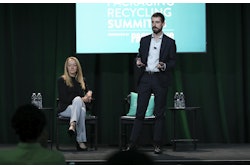
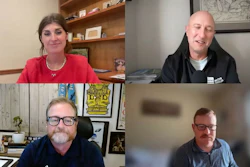
At the Packaging Recycling Summit, panelists highlighted how collaboration has become a powerful tool for boosting recycling rates. From local collection programs to national policy efforts, cross-sector partnerships are helping build a stronger, more connected system that can capture more material and put it back to use.
When it comes to increasing recovery rates for beverage packaging, groups like the American Beverage Assn. (ABA), a government lobbying group that represents the non-alcoholic beverage industry in the U.S, and the Can Manufacturers Institute (CMI), a trade association representing the U.S. metal can manufacturing industry and its suppliers, are leaning into partnerships to tackle both the supply and demand sides of the circularity equation.
Megan Daum, VP of sustainability at ABA, pointed to the growing patchwork of EPR legislation as a critical step toward boosting access and infrastructure. But passing laws is only the beginning. “We need a lot more of this stuff coming through the system,” she said, referring to recycled feedstock. “We want to incorporate more recycled content, but the supply needs to be there.”
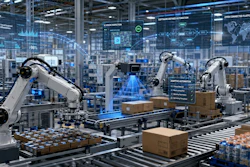
That supply hinges on upgrading the entire recycling ecosystem, from curbside collection to the performance of MRFs. “If you’re sending all beautiful clean material to MRFs that don’t have robots, that don’t have AI, did you really do good and get the system to circularity? No,” said Daum.
 | Read this related article and watch the video, “MRF LRS Improves Aluminum, HDPE Recovery with CMI-Funded AI Robot” |
That realization shaped the structure of Every Bottle Back, a $100 million initiative launched by ABA in 2019. The program funds education and access, but it also ensures that improved inputs are matched with upgraded MRFs that can capture those materials effectively.
CMI likewise is focused on targeted interventions. Scott Breen, the association’s SVP of sustainability, described how the group has invested in AI-powered sorting robots for last-chance lines where valuable containers are often lost to landfill. For example, CMI funded robots at Caglia Environmental, a waste solutions company in California, and at Lakeshore Recycling Systems (LRS) in the Chicagoland area. Under this model, CMI pays for the robot and shares in the revenue generated from the recovered aluminum. “Every quarter I get a performance report on how many cans each day that robot captured, along with a check for the aluminum,” Breen explained. “That money goes back into our system.”
While aluminum cans are already the most recycled and most valuable beverage container, Breen noted that in many parts of the country, more than 40% still end up in landfills. He emphasized that deposit return systems (DRS) are also a critical part of the solution. “A well-designed deposit system is the best way to get more aluminum back, and to get it back clean,” he said.
CMI has been vocal about including aluminum beverage cans in state-level policy discussions. Breen also pointed to the role of EPR in making DRS systems more politically viable and economically sound.
These interventions and collaborations not only generate more material for recycling, but they also demonstrate how industry stakeholders can build feedback loops that support both environmental and business goals. JD Ambati, founder and CEO of EverestLabs, whose robots power many of these recovery efforts, stressed the potential, saying, “There is absolutely an incredible amount of volume of material that can still be recovered with these partnerships.”
For Daum, such partnerships also reflect a broader commitment to fixing a fragmented system. With more than 9,000 different recycling programs in the U.S., achieving national scale is daunting, but she remains optimistic “You have to start somewhere,” she said. “And passing seven EPR laws is a really good start.” PW