When proposing new products or packages, whether informally or in person, it’s critical to be prepared. Retailers are looking for new ideas, but they have to be truly new. Here are a few tips to impress the retail-chain gatekeepers.
1. Offer something new and different. Whenever possible, try to create a truly new packaging/product concept or brand presentation. You need a “Wow!” first. Find a niche that’s underserved, or take the lead on an emerging consumer trend. And don’t be afraid of being very product-specific. If the idea is a good one, it will be expandable to a broader strategy. Find a balance between differentiating from the current landscape and remaining relevant to current customers’ lives. It’s a balance that some in the industry call “meaningful disruption.”
2. Develop a unique story. Think of the marketing angle as a fully realized story, and be able to present it that way. Then explain how the packaging presentation tells that story. Anticipate your competitors’ stories, or ones you suspect that the retailer has heard before. Refine the story until it’s brief and concise—and have a strong, committed point of view. Understand the realities of shelf sets and planograms, and make the case for eye-level placement for niche products.
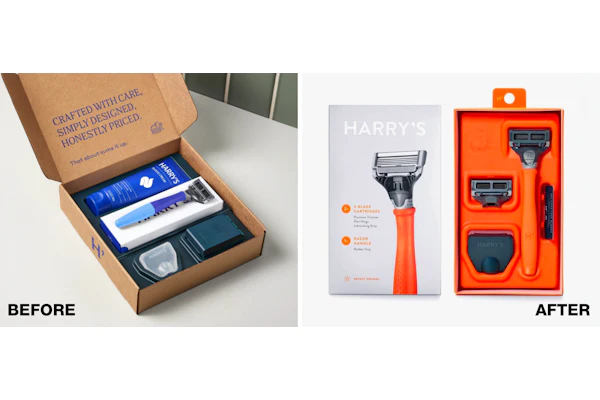
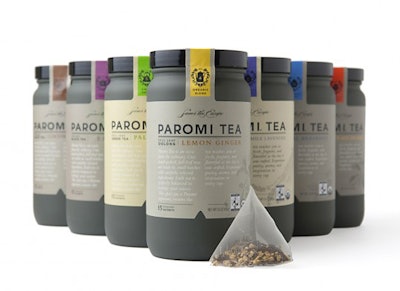
3. Create packaging that adds new value. Creativity is the only limitation in developing packaging that is more functional, is easier to open, is more fun to use, has an extended life, or turns into a “product” of its own. An easy way to add value with boxes and cartons is to experiment with still underutilized paperboard design features such as fifth panels, functional flaps, special cuts, surprise interior panels, and engaging sustainability stories.
4. Don’t try to compete on price alone. Understand that most retailers now have several tiers of private-label products. They are constantly thinking about how to compete on price, which may not be so difficult especially with their lower margin expectations. Nevertheless, be prepared to explain your pricing structure and tiering possibilities. Don’t be surprised if the retailer asks to inspect your operations, and come prepared with a distribution plan to supply products “just-in-time.” Whenever it makes sense, have an environmental story to tell. Retailers are keenly interested in environmental improvements in packaging and the metrics behind them.
5. Research the retailer. What is the retailer’s particular market position? What are their long-term goals? What consumers are they trying to reach? What target marketing are they using? Armed with that knowledge, weave your own story into their story. Do your homework about the retailer’s common shelving dimensions, stacking requirements, planogram layouts, and department delineations—and where your product fits in. Learn how your packaging will be handled through their particular distribution chain. Explore several merchandising options as far as how your package might sit on shelf, display, sell down, and restock.
6. Research the retailer’s customers. Learn how the retailer’s core customer shops, and respect the knowledge of the retailer. Ask yourself: How will this new product or package bring in new business or promote loyalty to the store? Often, retailers want their own custom packages of national brands so they can entice customers with exclusive deals or unique product propositions.
7. Come prepared with ROI projections. Research the bottom line, and make the case for fast ROI turnaround. Provide projected diagnostics on possible sales volumes and profit margins. Stick to direct product profitability that the retailer can expect—not secondary or tertiary profits that might come later. Use consumer research to find a successful compromise between what’s right for consumers and what’s right for the retailer. Understand the private-label competition, and how your product or package will complement the retailer’s own products and packages.
8. Come prepared with visual aids. If production packages aren’t available, have the highest-quality prototypes. Show visually what need there is in the marketplace that has not been met yet. Use virtual prototyping to show the package in a variety of store locations, and in a variety of optimized SKU sets. Show how the package might bring a stale category back to life with visual impact. Create a platform for a broader category push by expanding use occasions, crossing categories, or widening a category’s customer demographic profile.
9. Be responsive. React quickly to any potential issues brought up by the retailer. Follow up promptly. Maybe your competitor is having issues meeting the retailer’s expectations. Know what you don’t know, and admit it. If possible, partner with the retailer in fine-tuning a strategy, and try to get face-to-face meetings with the retailer’s packaging engineers.
10. Think seasonally, three seasons ahead. Seasonal packaging is a big driver for retail sales—and is planned well in advance. Be aware that custom films, labels, and containers can entail advance planning and machine modifications. But seasonal initiatives can also be achieved through secondary or POP packaging. Think about kitting options or even outsourcing gift packs. Be ready, however, for the added complexity that adding SKUs brings.
11. Be retail-ready and retailer-ready. Retailers are becoming more picky about how the product arrives at their distribution centers. Retail-ready often now means going from pallet to the shelf with almost no “unpacking” by the store staff, minimal secondary packaging to clean up or dispose of, and minimal shelf maintenance. (For more, see “Retail-ready best practices to be shelf-ready” in this Playbook.)
12. Learn the lingo. Will the initial visual Shelf Impact entice shoppers to pick up your package? Will the consumer’s First Moment of Truth with the package be memorable? Will they want to learn more on Secondary Panels? Do you have a Unique Selling Proposition that is truly unique? Is there a Reason to Believe that could close the sale by itself? Does the front panel design allow for Cross-Selling across categories? Can a group of your SKUs either create a Billboard Effect from far away or result in a Destination Effect through Color Blocking and Shelf Set organization? Will the User Experience with the package develop brand loyalty?
Liked this article? Download the Package Development Playbook here. Download the Flexible Playbook here.