Sustainability concerns are manifesting in a variety of ways in personal care product packaging, according to a new study from the Packaging Machinery Manufacturers Institute (PMMI), “2010 Personal Care Package Market Assessment.”
The market for personal care packaging in North America is expected to total between $70 billion and $80 billion in 2010. Currently, plastics (59%) and bottles (41%) dominate package materials and formats, respectively. However, PMMI researchers say to expect to see increasing rates of growth in tubes and pouches over the next five years: 38% for tubes, 51% for pouches, by 2015. Plastic use is expected to dramatically outpace all other packaging materials, showing a 34% growth rate by 2015.
“Personal care producers are being forced to seek efficient and cost-effective ways to alter packaging and reduce the overall amount of materials used,” says Jack Aguero, vice president of business development and marketing, ProMach, Inc., who chairs PMMI’s Business Intelligence Committee. “And tubes and pouches are seen as having a smaller environmental footprint than bottles.”
Forms of personal care products vary widely—liquids, gels, powders, etc.—and that poses challenges for accommodating new package formats. These challenges will increase as manufacturers move away from traditional packaging approaches, PMMI says. “
Personal care products are traditionally very diverse in their primary packaging and come with a great deal of secondary packaging to increase shelf appeal,” Aguero adds. “Retailers and consumers are demanding more environmentally friendly packaging practices—including reductions in packaging materials, changes in package format, and demands for smaller carbon footprints.” Because of these demands, there is a need for great flexibility, the report says.
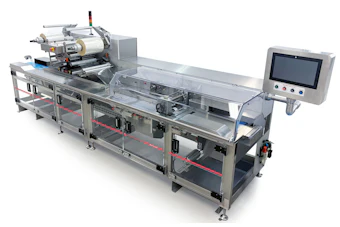
“With more versatile machinery, you have options for consolidating lines and producing more products on fewer machines, producing a wider variety of packages in a single day and automating complex tasks,” Aguero says. “While the push for ‘better, smarter, faster’ production won’t stop anytime soon, manufacturers need to examine all their options."
But that can be a trade-off, the report notes, because a highly flexible machine may not be suitable for specific applications. Aguero points out that manufacturers need to know all their options.
Copies of the “2010 Personal Care Package Market Assessment” report are available by contacting Paula Feldman, PMMI’s director of research and surveys, at 703/243-8555.